Empowering Communities, Shaping Futures: The African Center for Excellence (ACE) Leads with Purpose

July 16, 2025

A Place-Based Vision for Systemic Change

In the heart of South Seattle, Southwest Seattle, and South King County, the African Center for Excellence (ACE) stands as a beacon of transformative leadership. With a mission rooted in workforce development, youth mentorship, family empowerment, and systemic advocacy, ACE continues to dismantle barriers facing African immigrant and BIPOC communities through a place-based approach that honors cultural heritage and community resilience.

ACE’s work is not just about programs—it’s about building ecosystems of opportunity. From financial literacy workshops to digital skills training, ACE equips families with tools to thrive in a rapidly evolving world. Their culturally responsive initiatives reflect a deep understanding of the social determinants of health, education, and economic mobility.

One Seattle Day of Service: A Moment of Impact

On July 12, 2025, ACE proudly hosted a powerful community activation as part of the 4th Annual One Seattle Day of Service, marking its fourth consecutive year of leadership in this citywide movement. The event featured an African Youth Sports Clinic and Community Cleanup, drawing youth, families, and civic leaders into a shared space of service and celebration.

Seattle Mayor Bruce Harrell made ACE his final stop of the day, a symbolic gesture that underscored the organization’s grassroots impact. Joined by local changemakers and veteran public service professionals, Mayor Harrell spent meaningful time with youth, sharing reflections from his own journey as a student-athlete. His message on mental strength, discipline, and strategy—invoking the legacy of Michael Jordan—left a lasting impression on the young participants.

Article content
Mayor Bruce Harrel, ACE ED and Youth Dev Dir

This clinic wasn’t just about soccer—it was about leadership development, civic engagement, and building pathways to scholarships and higher education. It embodied ACE’s commitment to nurturing the next generation of African immigrant leaders through culturally rooted programming.

South Link Connections: Shaping the Future of Transit in South King County

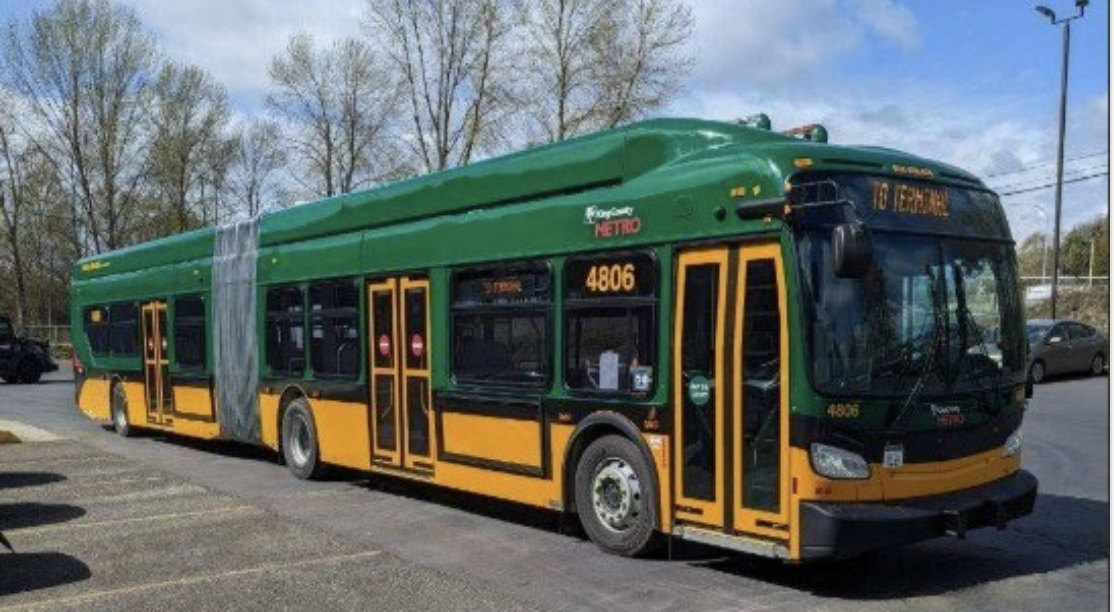
As South King County prepares for the arrival of the Federal Way Link Extension in 2026, King County Metro is launching a bold initiative to redesign bus service across the region. The South Link Connections project is more than a transit update—it’s a chance for communities to shape how mobility, equity, and access will look for generations to come.

What’s Changing?

The Federal Way Link Extension will add three new light rail stations:

  • Kent Des Moines Station (near Highline College)
  • Star Lake Station (near S. 272nd Street)
  • Federal Way Downtown Station (at the current Transit Center)

These stations will connect riders to faster, more frequent service across the region—including a 16-minute ride to Sea-Tac Airport and a 42-minute trip to Downtown Seattle.

To prepare, Metro is redesigning 22 bus routes serving 11 cities and unincorporated areas including Auburn, Burien, Kent, SeaTac, Tukwila, and Federal Way. The goal: create seamless connections between buses and light rail, improve service frequency, and ensure transit meets the needs of all riders.

Community at the Center

Metro is engaging deeply with residents, especially those from historically underserved communities. Through surveys, open houses, and outreach led by community-based organizations, Metro is gathering input on:

  • Mobility barriers and service gaps
  • Equity priorities for BIPOC, immigrant, and low-income riders
  • Ideas for improving access to jobs, schools, and essential services

A Mobility Board made up of local riders and a Partner Review Board of community leaders and institutions are helping guide the process.

Why Your Voice Matters

Transit is a lifeline—for youth commuting to school, workers heading to job sites, and families accessing healthcare and groceries. The South Link Connections plan will shape how these lifelines operate for decades.

If you live, work, or travel in South King County, now is the time to speak up. Metro is accepting public feedback through August 31, 2025. You can:

Final Thoughts

This is a pivotal moment for transit equity. By participating, we can ensure that the voices of African immigrant, BIPOC, and working-class communities are not just heard—but reflected in the final design. Let’s build a system that moves all of us forward.

King County Metro South Link Connections


Help Shape the Future of Transit in South King County!

King County Metro is inviting YOU to help design a better, more equitable bus service through the Southlink Connections Transit Plan.

Whether you’re a daily rider, a parent navigating school routes, or a community advocate—your voice matters. This is a chance to ensure our neighborhoods are connected, accessible, and responsive to real community needs.

✅ Review the plan 

🗣️ Take the survey before August 31 

🌐 Learn more at southlinkconnections.com

https://kingcounty.gov/en/dept/metro/programs-and-projects/south-link-connections

Let’s make sure East African, immigrant, and BIPOC communities are part of the conversation. Transit equity starts with us.

#SouthKingCounty #TransitEquity #KingCountyMetro #CommunityVoice #SouthlinkConnections #MobilityJustice #PublicTransit #SeattleAdvocacy #AfricanCenterForExcellence

Equitable Development and Anti-Displacement: A Personal and Professional Commitment

Seattle’s rapid economic growth has reshaped neighborhoods, bringing both prosperity and displacement. As someone deeply engaged in workforce development and advocacy, I have witnessed firsthand the unintended consequences of transit-oriented development and rising property values. While economic expansion is necessary, it must be equitable, ensuring that long-standing communities—particularly BIPOC and immigrant residents—are not pushed out of the very opportunities they helped create.

Why I Advocate for Anti-Displacement Efforts

My connection to Seattle’s Central District runs deep. I recall the vibrancy of 23rd and Cherry, where my barber ran a small business, serving generations of families. Over the years, however, the city’s economic boom forced many African American, immigrant, and BIPOC entrepreneurs out of these economic zones, severing their access to transit and essential resources. Historically, 60% of Central District residents were African American—today, that number has dwindled to just 6% KUOW – Race matters: Understanding how the Central Area was gentrified.

Similarly, the Chinatown-International District (CID) faces mounting pressure from transit-oriented developments. While infrastructure improvements are necessary, they must not come at the cost of displacing long-standing communities. The proposed Sound Transit expansion has sparked concerns among CID residents, who fear that new stations could lead to further displacement How a New Light Rail Station Could Impact the Chinatown-International District.

The Role of Advocacy and Advisory Leadership

As an advocate and workforce professional, I have seen the transformation of Columbia City, the Central District, and the CID. While I welcome economic growth, I am frustrated by the systemic gentrification that has resulted from policies like the transit levy—policies that BIPOC and immigrant communities once supported, only to find themselves excluded from the benefits CID community members continue to push back against Sound Transit.

Seattle’s Equitable Development Initiative (EDI) aims to address these disparities by funding projects that promote community stability and prevent displacement Equitable Development Initiative – OPCD | seattle.gov. Mayor Bruce Harrell’s recent Executive Order on Anti-Displacement seeks to strengthen protections for vulnerable residents and small businesses Mayor Harrell Issues New Executive Order to Strengthen Anti-Displacement Strategies – Office of the Mayor. However, these efforts require community voices to ensure that policies are not just well-intended but truly effective.

Civic Leaders Speak on Displacement

Seattle’s civic leaders have long acknowledged the challenges of gentrification. Former King County Executive Ron Sims noted that redlining and economic disparities have historically shaped Seattle’s racial demographics, forcing African Americans into concentrated areas like the Central District. Councilmember Kshama Sawant has championed policies to fund affordable housing in the Central District, stating, “Our movement has won a public commitment from City Hall to fund publicly owned, permanently affordable housing for Black working-class and poor community members”.

Community leaders in the CID have also voiced concerns about transit expansion. Betty Lau, a member of Transit Equity for All, emphasized the need for community-led development, stating, “A station placed in the right way could revive the CID—but placed in the wrong way, it will kill it”.

Moving Forward

Equitable development is not just about preventing displacement—it is about creating opportunities for historically marginalized communities to thrive. As I engage in advisory discussions on anti-displacement strategies, I bring both professional expertise and personal experience to the table. My commitment is to ensure that Seattle’s growth does not come at the expense of its most vulnerable residents.

Seattle has the chance to lead by example, balancing economic expansion with community preservation. The question is not whether we grow, but how we grow—and whether we do so in a way that honors the people who built these neighborhoods.

Additional Resources on equitable development and anti-displacement efforts in Seattle:

National Resources

  • National Equity Project – Offers equity-focused resources, including tools, webinars, and frameworks for community leaders. Explore more
  • PolicyLink Equitable Development Toolkit – A collection of strategies aimed at reversing segregation, preventing displacement, and promoting equitable revitalization. View the toolkit
  • Urban Displacement Project – Research and policy recommendations on gentrification and displacement dynamics across U.S. cities. Learn more

Regional Resources (Seattle & Washington State)

  • Seattle Equitable Development Initiative – Supports projects that promote strong communities and equitable access. Read more
  • Seattle Anti-Displacement Strategies – A comprehensive framework addressing housing affordability and displacement risks. View the strategy
  • Mayor Harrell’s Executive Order on Anti-Displacement – Strengthening protections for vulnerable residents and small businesses. Details here
  • Washington State Anti-Displacement Strategies – Guidance for developing housing action plans to minimize displacement. Explore more

Abdirahman Omar is a dedicated advocate for equitable development, workforce development professional. As a leader in workforce development and civic engagement, he has worked tirelessly to address systemic barriers facing immigrant and BIPOC communities. His deep-rooted connection to Seattle’s Central District and Chinatown-International District has shaped his commitment to anti-displacement efforts, ensuring that economic growth does not come at the expense of long-standing communities. Through mentorship, policy advocacy, and community collaboration, Abdirahman strives to foster inclusive opportunities that preserve cultural identity and uplift historically marginalized voices.

Contact Information: Email: abdirahman@africancareers.org

Free Pro-Sports Camp

Dear Families,

We’re pleased to share an exciting opportunity — #ProSportsCamp is now open for registration! This camp is designed for young athletes and their families to enjoy high-quality training, team-building, and fun-filled experiences with professional coaches and mentors.

Whether your child is new to sports or looking to take their skills to the next level, Pro-Sports Camp offers something for everyone. It’s more than just training — it’s about building confidence, character, and community through sports.

Location: Van Asselt Community Center, Seattle

Dates: July 8 – July 12, 2025

Time: 9:00 AM – 4:00 PM

 Learn more and register here:
https://anc.apm.activecommunities.com/seattle/activity/search/detail/75245?onlineSiteId=0&from_original_cui=true&blm_aid=2624513

We encourage you to take advantage of this amazing opportunity for your child to grow both on and off the field. Spots may fill quickly — register today!

Abdirahman Omar
African Center for Excellence

Environmental Sustainability & Equitable Access: A Call to Action

Abdirahman Omar,

Green spaces should never be an afterthought—they are essential for the well-being, safety, and health of communities. Yet, equitable access to these spaces remains a systemic challenge, particularly for African immigrant and BIPOC communities in Seattle, King County, and beyond.

Despite Seattle’s recognition as the 17th United Nations-designated city for environmental restoration, systemic failures continue to deny historically marginalized communities’ access to safe parks and recreational fields. While environmental restoration efforts have flourished, disparities in green space access persist—leaving refugee and immigrant youth, families, and elders without equal opportunities to enjoy nature, exercise, and connect socially.

The African Center for Excellence: Pioneering Equitable Green Space Access

The African Center for Excellence, led by dedicated environmental advocates and policy influencers, recognizes that true environmental justice must include equitable access to nature.

Their work underscores the reality that green spaces are not just environmental assets, but critical social resources that impact health outcomes, community development, and generational resilience.

This initiative focuses on ensuring:

Safe & accessible parks for seniors—spaces where elders can gather, exercise, and maintain their well-being.

✅ Equitable access to sports fields for youth—essential for physical health, leadership growth, and community-building.

✅ Educational exposure to environmental sustainability—so young scholars can experience and protect the beauty of the Pacific Northwest.

Breaking Down Systemic Barriers

The time for change is now. Local organizations, policymakers, and environmental groups must unite to ensure that parks, sports fields, and recreational spaces are accessible to all—regardless of race, income, or background. Equitable environmental restoration cannot exist without accessible green spaces, and the health and future of these communities depend on systemic reform.

Join the Movement

Every person deserves the opportunity to gather, play, heal, and thrive in safe green spaces. Whether through policy reform, community advocacy, or direct action, we must demand inclusivity in environmental planning. The African Center for Excellence continues to lead this fight—but true change requires collective effort.

Let’s build a sustainable, just future together. 🌍🌱

For partnership and collaboration, contact us at: Abdirahman@africancareers.org

#EnvironmentalJustice #EquitableGreenSpaces #BIPOCLeadership #SustainableFuture

King County Metro Resumes Fare Enforcement: What It Means for Immigrant, Refugee, and BIPOC Riders

May 28, 2025

By Abdirahman Omar

Starting May 31, 2025, King County Metro will resume fare enforcement on buses and streetcars, marking a significant shift in transit policy after years of reevaluation. Under this policy, Fare Enforcement Officers will begin issuing printed warnings and citations to riders who cannot provide proof of fare payment. Riders will be allowed two warnings without consequence, but a third violation could result in a fine or alternative resolution. Learn more here. King County Metro starts enforcing fares Saturday | king5.com

While fare enforcement may appear to be a routine administrative measure to ensure operational sustainability, for immigrant, refugee, and BIPOC (Black, Indigenous, and People of Color) communities, it raises deep concerns about equity, access, and disproportionate harm.

The Implication of Resuming Fare Enforcement

At the heart of this policy lies a larger question: Who gets left behind when public services prioritize compliance over compassion?

Resuming fare enforcement may create barriers to mobility for low-income communities, many of whom rely on public transit to get to work, school, health care, and social services. For immigrants and refugees, who often work multiple low-wage jobs and face language barriers or lack access to digital fare tools, even a minor infraction can escalate into a significant burden—financially and emotionally.

For undocumented immigrants, any interaction with a uniformed officer can cause distress, confusion, or fear, even if the officer is not a law enforcement agent. The potential for misunderstandings, especially with limited English proficiency, makes fare enforcement a gateway to further marginalization.

Historical Challenges and the Importance of Public Awareness

This is not the first time Metro’s fare enforcement approach has raised concerns. In past years, data revealed that fare enforcement disproportionately impacted BIPOC riders, particularly Black and Indigenous individuals. Previous enforcement strategies have been criticized for appearing punitive rather than educational or restorative.

Moreover, lack of public awareness about changes in fare enforcement can lead to unintended violations. If community members are not informed in languages they understand or through culturally relevant channels, they risk being penalized not due to willful misconduct but because of systemic communication failures.

This underscores the urgent need for accessible outreach, multilingual signage, and direct community engagement to ensure that all riders—not just the digitally connected or English-speaking—understand their rights and responsibilities.

How Will This Affect Our Communities?

  • Economic Hardship: Fines, even if minimal, can cause stress for those living paycheck to paycheck.
  • Distrust and Fear: Uniformed fare enforcement may trigger anxiety, particularly for those from countries where such uniforms represent oppressive regimes.
  • Criminalization of Poverty: Although the goal may be accountability, the effect could be increased policing of poor and marginalized populations.

Are There Better Ways?

Yes—and some have already been assessed:

  1. Fare Ambassadors Over Enforcers: Metro has piloted programs with Fare Ambassadors who educate rather than penalize, providing resources and empathy over confrontation.
  2. Free or Reduced Fare Programs: Expansion of ORCA LIFT and subsidized fares can proactively reduce fare evasion by making fares more accessible.
  3. Community Transit Passes: Partnering with schools, community organizations, and employers to provide pre-paid transit passes ensures more people ride with confidence.
  4. Restorative Justice Models: Instead of fines, Metro can adopt a community service or education-based resolution system to address fare evasion with dignity.

A Call to Equity-Centered Implementation

As Metro moves forward with fare enforcement, it must do so with a commitment to racial and economic justice. That means investing in:

  • Community-centered communication campaigns,
  • Hiring culturally competent staff with trauma-informed training,
  • Data transparency to monitor and report racial disparities,
  • Ongoing engagement with immigrant, refugee, and BIPOC communities to adjust strategies accordingly.

Final Thoughts

Transit is more than a ride—it is a lifeline for many in King County. As fare enforcement returns, Metro must balance financial accountability with its duty to serve equitably. We urge Metro to prioritize education over punishment and to treat every rider with dignity, regardless of income, immigration status, or language proficiency.

Transportation equity means no one is left behind at the bus stop. Let us ensure that vision guides our policies—not just our promises.

If you are part of a community organization or rider advocacy group and would like to help raise awareness about these changes, or advocate for more just policies, reach out to King County Metro or local advocacy groups

#TransitEquity #KingCountyMetro #ImmigrantJustice #BIPOCVoices

How much do immigrants contribute to the economy?

For the United States as a whole, immigrants’ share of total output was 18.0% in 2023 (see Table 1) or $2.1 trillion in 2024 dollars. This means that the contribution of immigrants to economic output is larger than their share of the total population, as immigrants made up 14.3% of the total U.S. population in the same year.

Close

For the United States as a whole, immigrants’ share of total output was 18.0% in 2023 (see Table 1) or $2.1 trillion in 2024 dollars. This means that the contribution of immigrants to economic output is larger than their share of the total population, as immigrants made up 14.3% of the total U.S. population in the same year.

One way to quantify the contribution of immigrants to the U.S. economy is by accounting for the wages and salaries they earn, as well as the income of immigrant-owned businesses, as a share of all wages, salaries, and business income during a given period. For the United States as a whole, immigrants’ share of total output was 18.0% in 2023 (see Table 1) or $2.1 trillion in 2024 dollars. This means that the contribution of immigrants to economic output is larger than their share of the total population, as immigrants made up 14.3% of the total U.S. population in the same year.

Table 1

Immigrants punch above their weight in the U.S. economyReal contribution to economic output compared with population size, by nativity, 2023

Notes: All figures are in 2024 dollars. Economic output is derived from wages and salary and proprietors’ income. The immigrant share is simply the total income from these sources attributable to immigrant workers and business owners.

Source: EPI analysis of U.S. Census Bureau, American Community Survey microdata accessed via Ruggles et al. 2025. IPUMS USA: Version 16.0 [2023 ACS 1-year]. Minneapolis, MN: IPUMS, 2025. https://doi.org/10.18128/D010.V16.0.

 Share Tweet

 Embed  Download image

Immigrants have an outsized role in U.S. economic output because they are disproportionately likely to be working and are concentrated among prime working ages. Despite accounting for 14.3% of the population, immigrants made up 18.6% of the labor force in 2023.9 Immigrants are also more likely to start businesses. Relative to their share of the population and to native-born peers, immigrants are significantly more likely to start companies of all sizes, including those that generate employment.10 Between 2005 and 2010, by one measure, immigrants had an 80% higher rate of firm founding than their U.S.-born peers.11 Even if many of these business openings ultimately result in closings, the constant churn is important to economic growth. According to another study, immigrants in 2013 accounted for 16% of the U.S. labor force but were 18% of business owners, and 28% of main street businesses, which are defined by the authors as retail, food services and accommodation, and neighborhood services such as nail salons, beauty shops, and gas stations).12


Notes

9. EPI analysis of Bureau of Labor Statistics’ Current Population Survey public data series, Table A-7: Employment Status of the Civilian Population by Nativity and Sex, Not Seasonally Adjusted. Retrieved March 10, 2025.

10. Pierre Azoulay, Benjamin F. Jones, J. Daniel Kim, and Javier Miranda, “Immigration and Entrepreneurship in the United States,” American Economic Review: Insights 4, no. 1 (March 2022): 71–88.

11. Pierre Azoulay, Benjamin F. Jones, J. Daniel Kim, and Javier Miranda, “Immigration and Entrepreneurship in the United States,” American Economic Review: Insights 4, no. 1 (March 2022): 71–88.

12. David Dyssegaard Kallick, Bringing Vitality to Main Street: How Immigrant Small Businesses Help Local Economies Grow, Fiscal Policy Institute and Americas Society/Council of The Americas, January 2015.

Published by Economic Policy Institute

Sports & Youth Development Program

At African Careers, our Sports and Youth Development Program is a powerful community initiative rooted in South Seattle and King County. We are committed to inspiring, mentoring, coaching, and developing underserved youth through the transformative power of sports.

Our program goes beyond athletic training — we foster leadership, teamwork, discipline, and resilience, helping young people unlock their full potential both on and off the field. By creating safe, inclusive spaces for growth and connection, we empower youth to build confidence, set goals, and pursue brighter futures.

Through partnerships with dedicated coaches, mentors, and community leaders, we aim to close opportunity gaps and ensure every young person — regardless of background — has access to positive role models, structured activities, and long-term support.

Together, we are investing in the next generation of leaders, athletes, and changemakers in South Seattle and King County.

Equity in Education: A Commitment to Every Student’s Success

April 5, 2025

By Abdirahman Omar

Education is often hailed as the great equalizer bridge from disadvantage to opportunity. But what happens when that bridge is only accessible to some and not all? When academic pathways are riddled with systemic barriers that disproportionately impact historically marginalized communities, we must confront an uncomfortable truth: equality is not the same as equity.

At its core, equity in education means recognizing and responding to the unique circumstances of each student. It is not about treating all students the same, it is about meeting students where they are and supporting them with what they need to succeed.

This is not a lofty ideal. It is necessary course correction in a system that has failed too often:

  • Students of color
  • English language learners
  • Students with disabilities
  • Youth from low-income households

📚 Reports by The Education Trust and the Learning Policy Institute have consistently documented how systemic inequality deprives these groups of access to rigorous curricula, experienced educators, and emotionally safe learning environments.

Equality ≠ Equity

Equality offers everyone the same resources. Equity offers each learner the resources and opportunities they specifically need to thrive.

That might mean:

  • Language support programs for English language learners
  • Trauma-informed practices for students impacted by violence or displacement
  • Culturally responsive curricula that affirm diverse identities.
  • Flexible learning pathways for students with varying learning styles and life experiences

As Dr. Adeyemi Stembridge writes in Brilliant Teaching: Using Culture and Artful Thinking to Close Equity Gaps:

“We cannot teach students effectively if we do not first honor their humanity and understand the contexts they bring into the classroom.”

Systemic Change: More Than Just Programs

Equity requires more than one-on-one accommodation. It demands institutional change. We must ask:

  • Are we dismantling structural barriers that limit opportunity?
  • Are we hiring and retaining educators who reflect and understand the students they serve?
  • Are policies guided by disaggregated data and community input?
  • Are we confronting biases and disrupting outdated practices, including funding models that reinforce inequity?

The Opportunity Myth by TNTP illustrates how students of color and those in poverty are often denied grade-level instruction—despite being capable of success.

Culturally Responsive Teaching: The Heart of Equity

Culturally responsive teaching (CRT) is not a trend—it is a change in basic assumptions. It acknowledges that students bring their full cultural, historical, and linguistic identities into the classroom. Educators who embrace CRT:

  • Build authentic relationships with students.
  • Embed diverse voices and experiences into lesson plans.
  • Use learning to affirm identities and promote belonging.

As Dr. Stembridge reminds us:

“Culture is not a distraction from learning—it is the lens through which learning becomes relevant and transformational.”

Explore this guide from Edutopia and the National Equity Project’s framework for implementing CRT in your school or organization.

A Theory of Change in Equity in Education

Equity-focused systems must be rooted in a Theory of Change—a strategic vision linking action to outcomes. A simplified model might look like this:

IF schools invest in:

  • Culturally responsive pedagogy
  • Equitable resource allocation
  • Diverse and inclusive leadership
  • Trauma-informed and restorative practices

THEN students receive:

  • Support that meets their lived realities
  • Affirmation of their culture and identity
  • Meaningful access to academic and social success

SO THAT: Students become confident, compassionate leaders—prepared to thrive and contribute to a just society.

Explore national resources like:

  • Aspen Institute: Pursuing Social and Emotional Development Through a Racial Equity Lens
  • Policy Link: The Equity Manifesto
  • Education Equity Indicators Project

Regional Spotlight: Kent and South King County

The Road Map Project in King County is a regional initiative working to eliminate opportunity gaps across seven school districts, including Kent School District. Their collective impact approach is driven by:

  • Parent Academy for Student Achievement (PASA) – A transformative model that trains families to become education advocates, especially parents of color, immigrants, and refugees.

Learn more about PASA through the Kent School District site and the Road Map Project.

  • Youth-led initiatives like Rainier Valley Corps and Open Doors Youth Reengagement programs that help disconnected students return to learning and civic engagement.

Other Pacific Northwest equity programs to explore:

Final Thoughts: A Call to Action

The path to educational equity is not easy. It requires humility, policy reform, investment, and trust-building. But the vision is powerful: a school system where every child knows they matter—where race, income, language, or ability no longer predict academic outcomes.

Dr. Adeyemi Stembridge encapsulates this beautifully:

“The pursuit of equity is not about fixing students—it’s about fixing broken systems so they can serve students better.”

Let us be courageous enough to reimagine these systems, and committed enough to do the daily work it takes to transform them.

Because equity in education is not a dream, it is a duty. And in fulfilling it, we do not just transform schools. We transform society.

🔗 More Resources

  • National Urban League Education Programs
  • Great Schools Partnership: Equity Resources
  • OSPI Washington – Equity and Civil Rights

#EquityInEducation #TransformingSchools #CulturallyResponsiveTeaching #PASA #RoadMapProject #EveryStudentMatters #BrilliantTeaching #EquityIsJustice #ParentEmpowerment #WAEquity #StudentVoice